Affiliate Disclaimer: This article contains affiliate links. If you buy through them, we may earn a small commission at no extra cost to you. Our recommendations are based on research, product specifications and feedback from verified buyers, and we only include products we think are worth considering. As an Amazon Associate we earn from qualifying purchases.
You cut the carbs, cleared the pantry and felt great for about a day. Then the headache arrived, your legs felt like lead and your brain seemed to run on low battery. Welcome to the keto flu. The good news: it is common, it is usually short, and the right keto flu remedies are simple, cheap and mostly found in your kitchen.
This guide explains what the keto flu is, how long it typically lasts, and exactly what to do about it. You will also find a free electrolyte planner further down that gives you daily sodium, potassium, magnesium and fluid ranges based on your weight, activity and climate.
Quick answer: the 5 fixes that help most
- Get more sodium. Salt your food generously and drink a cup of broth once or twice a day.
- Drink enough fluids. Water alone is not enough if you are also losing salt, so pair it with electrolytes.
- Eat potassium-rich low carb foods. Leafy greens, avocado, salmon and meat are your best sources.
- Cover your magnesium. Nuts, seeds and greens first, a magnesium glycinate supplement if you get cramps.
- Go easy for a week. Light exercise, enough sleep and no aggressive calorie cutting while your body adapts.
What is the keto flu?
The keto flu is not an infection and it is not contagious. It is the informal name for a cluster of symptoms that many people get in the first days or weeks of a ketogenic diet, while the body switches from burning mostly glucose to burning mostly fat and ketones.
Researchers at the University of Tasmania analyzed hundreds of online forum posts from people describing their own keto flu. The most common complaints were a general flu-like feeling, headache, fatigue, nausea, dizziness, brain fog and stomach discomfort. Reports peaked in the first week and became rare after about four weeks (Bostock et al., Frontiers in Nutrition, 2020). The authors also point out that this is self-reported data without a control group, so it describes what people experience rather than proving a cause.
Common keto flu symptoms
- Headache, often dull and lasting most of the day
- Fatigue and low motivation, especially during workouts
- Brain fog and trouble concentrating
- Dizziness or light-headedness, mostly when standing up quickly
- Muscle cramps, often in the calves at night
- Nausea, constipation or other digestive changes
- Irritability, sugar cravings and poorer sleep
Why it happens: water, salt and a fuel switch
Three things change at once when you drop your carbs sharply.
You lose water. Your body stores carbohydrate as glycogen in your liver and muscles, and every gram of glycogen is stored together with several grams of water. As you burn through those stores in the first days, the water goes with it. That is also why the scale often drops quickly in week one.
You lose sodium. Lower insulin levels signal your kidneys to excrete more sodium. On top of that, a keto diet usually cuts out bread, crackers and many processed foods, which are major sources of salt in a typical diet. Less sodium coming in and more going out is a fast route to headaches, fatigue and dizziness.
Your fuel system is retooling. It takes time for your body to ramp up fat burning and ketone production. Until it does, energy can feel uneven. We explain this process in more detail in our article on ketosis vs fat adaptation.
How long does the keto flu last?
For most people it is a matter of days, not weeks. A typical pattern looks like this:
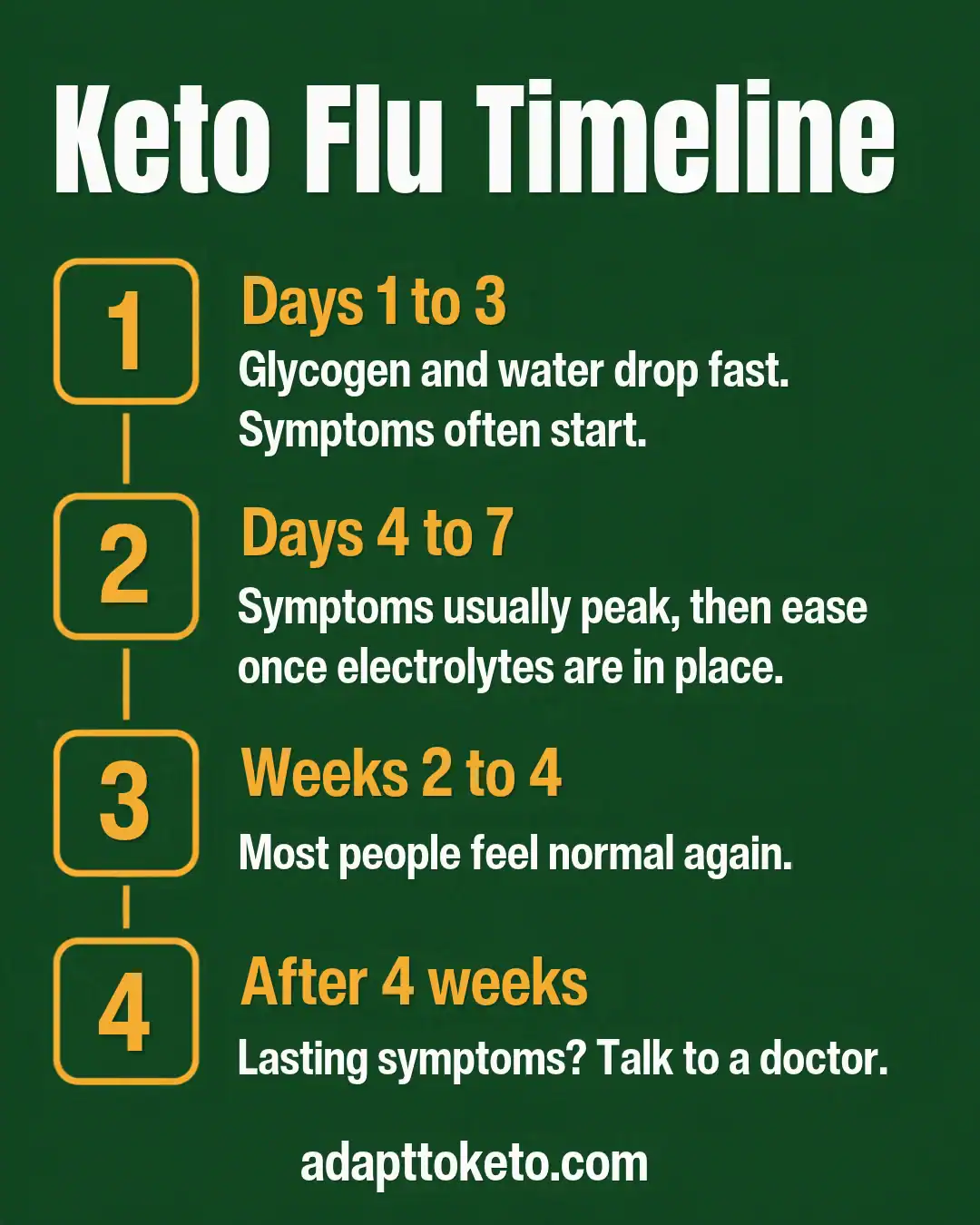
- Days 1 to 3: glycogen and water drop fast. Symptoms often start here.
- Days 4 to 7: symptoms usually peak, then improve quickly once electrolytes are in place.
- Weeks 2 to 4: most people feel normal again, often with steadier energy than before.
- After 4 weeks: ongoing symptoms are not typical keto flu and are worth discussing with a doctor.
Want to know when the full adaptation usually kicks in? Read how long it takes to get keto adapted.
Plan your electrolytes with our free calculator
Fill in your weight, how much you sweat, your climate and how long you have been on keto. The planner gives you daily ranges and practical tips for the symptoms you tick. If you take medication for blood pressure, diabetes or your heart, or if you have kidney disease, it will tell you to speak with your doctor first instead of giving numbers.
Keto Flu Electrolyte Planner
Loading the plannerEnter a few details to get daily sodium, potassium, magnesium and fluid ranges for your first weeks on keto, plus tips for the symptoms you have right now.
Sodium
0
Salt your food, add broth, use a drink if needed
Potassium
0
Mostly from food: greens, avocado, fish, meat
Magnesium
0
Total from food and supplements
Fluids
0
Water, broth and electrolyte drinks
What to expect
Tips for your symptoms
Ranges are general guidance for healthy adults on a ketogenic diet, based on published practitioner advice and US dietary reference intakes. They are not medical advice. Supplemental magnesium above 350 mg a day can cause diarrhea.
Keto flu remedies that actually help
1. Sodium first
Sodium is the electrolyte most people run short on, and fixing it often helps within an hour. Virta Health, a clinic that has treated thousands of patients with ketogenic nutrition, suggests an average of 3,000 to 5,000 mg of sodium a day for people on a well-formulated ketogenic diet (Virta Health). That is more than general dietary guidelines advise, because keto changes how your kidneys handle salt.
In practice that means salting your meals to taste and adding one or two cups of broth a day. One teaspoon of table salt contains about 2,300 mg of sodium, and a cup of bouillon typically adds several hundred milligrams more (check the label). An electrolyte drink is useful on hot days, after training or when you simply do not feel like broth.
2. Drink, but not only plain water
Because you are losing water in the first week, drinking more makes sense. Drinking large amounts of plain water while your sodium is low, however, can make symptoms worse. Combine your water with salt, broth or an electrolyte drink, and use thirst and light yellow urine as your guide.
3. Potassium from food
The US adequate intake for potassium is 3,400 mg a day for men and 2,600 mg for women (NIH Office of Dietary Supplements). On keto, aim for that range or a bit higher through food. A cup of cooked spinach provides roughly 800 mg, a medium avocado around 700 mg or more, and a portion of salmon or beef several hundred milligrams. Potassium pills sold over the counter contain only small amounts, and higher doses should only be taken on medical advice.
4. Magnesium for cramps and sleep
Adults need about 310 to 420 mg of magnesium a day in total. Nuts, seeds, leafy greens and dark chocolate are good keto sources. If you still get cramps, a magnesium glycinate supplement in the evening is a popular choice because it is generally gentle on the stomach. Keep supplements at or under 350 mg a day, the upper limit for supplemental magnesium, as more often causes diarrhea (NIH ODS).
5. Ease in and take it slow
Some people prefer to lower carbs over a week or two instead of overnight, which can soften the transition. Keep workouts light in the first week, prioritize sleep, and avoid combining keto with a big calorie deficit right away. If you want to set sensible targets first, start with our keto macro calculator.
Electrolyte products worth considering
You do not need to buy anything to beat the keto flu. Salt, broth and real food do most of the work. Electrolyte products are simply convenient, especially for travel, training and busy days. These are the ones we would look at first.
LMNT Zero Sugar Electrolytes
LMNT is built around sodium, which makes it a natural fit for keto flu. According to the manufacturer, each stick contains 1,000 mg of sodium, 200 mg of potassium and 60 mg of magnesium, with no sugar. It is salty by design, so many people start with half a stick in a large glass of water. Read our full LMNT review.
REDMOND Re-Lyte Electrolyte Mix
Re-Lyte is a sugar-free electrolyte mix based on unrefined sea salt, available as a tub or in stick packs. It is a good option if you want a slightly milder taste than very high sodium drinks. Check the label of the flavor you choose for the exact amounts per serving. More details in our Re-Lyte review.
KEY NUTRIENTS Electrolytes Powder
Key Nutrients is a zero sugar, zero calorie powder that tastes more like a regular sports drink. It contains less sodium per serving than LMNT, which makes it easy to sip throughout the day alongside salted meals. See our Key Nutrients review.
Doctor’s Best Magnesium Glycinate
If cramps or poor sleep are your main complaints, a chelated magnesium such as Doctor’s Best High Absorption Magnesium is a widely used choice. Check how much elemental magnesium each serving provides and stay within the 350 mg supplemental limit.
The budget option: bouillon
A jar of bouillon base costs little, lasts for weeks and gives you a warm, salty drink in seconds. For many people one or two cups a day is all they need to keep keto flu away.
Want to compare more options? Our roundup of the best keto electrolyte powders covers the most popular brands side by side.
Mistakes that make the keto flu worse
- Cutting salt because you think it is unhealthy. On keto, low sodium is one of the main triggers.
- Chugging plain water. Without electrolytes, extra water can dilute what little sodium you have.
- Adding too much fat at once. Large doses of MCT oil or fat bombs on day one are a common cause of nausea.
- Starting a hard training plan in week one. Give your body a week to adapt before pushing intensity.
- Combining keto with a huge calorie deficit. Eating too little on top of the switch makes fatigue and cravings much harder to manage.
When to see a doctor
Talk to a doctor before starting keto if you take medication for diabetes, blood pressure or a heart condition, if you have kidney disease, or if you are pregnant or breastfeeding. Keto can lower blood sugar and blood pressure quickly, and some diabetes medications are not safe to combine with a very low carb diet without supervision. Get medical help right away if you have chest pain, fainting, confusion, a strong irregular heartbeat or vomiting that will not stop.
Final verdict
The keto flu is mostly a short-term electrolyte and fluid problem during a big metabolic change. Put sodium first, drink enough, eat potassium-rich vegetables and cover your magnesium, and most people feel normal again within a week or two. Use the planner above to set your own daily ranges, and keep an electrolyte drink or a jar of bouillon on hand for the tough days.
Related articles
- How to Get into Keto
- How Long Does It Take to Get Keto Adapted?
- Best Keto Electrolyte Powder
- Keto Macro Calculator
FAQ
Question: Does everyone get the keto flu?
Answer: No. Many people notice little more than a mild headache, while others feel rough for several days. Getting enough sodium and fluids from day one makes a noticeable difference.
Question: Does keto flu mean I am in ketosis?
Answer: Not necessarily. It mostly reflects water and electrolyte loss in the first days. If you want to know whether you are in ketosis, a blood ketone meter is the most reliable way to check.
Question: Can I take ibuprofen or paracetamol for a keto flu headache?
Answer: Pain relievers may ease the headache, but they do not fix the cause. Try broth or an electrolyte drink with a glass of water first, and follow the label or your pharmacist’s advice for any medication.
Question: Will I get the keto flu again if I eat carbs and restart?
Answer: It can happen, often in a milder form. Restarting with electrolytes in place from the first day usually keeps it short.
Question: Should I stop keto if the symptoms are bad?
Answer: Mild symptoms usually pass within a week once you fix electrolytes. If they are severe, last longer than a few weeks, or include any of the warning signs above, stop and talk to a doctor.
This article is for general information and does not replace advice from your doctor or dietitian.