Affiliate Disclaimer: This article contains affiliate links. If you buy through them, we may earn a small commission at no extra cost to you. Our recommendations are based on research, product specifications and feedback from verified buyers, and we only include products we think are worth considering. As an Amazon Associate we earn from qualifying purchases.
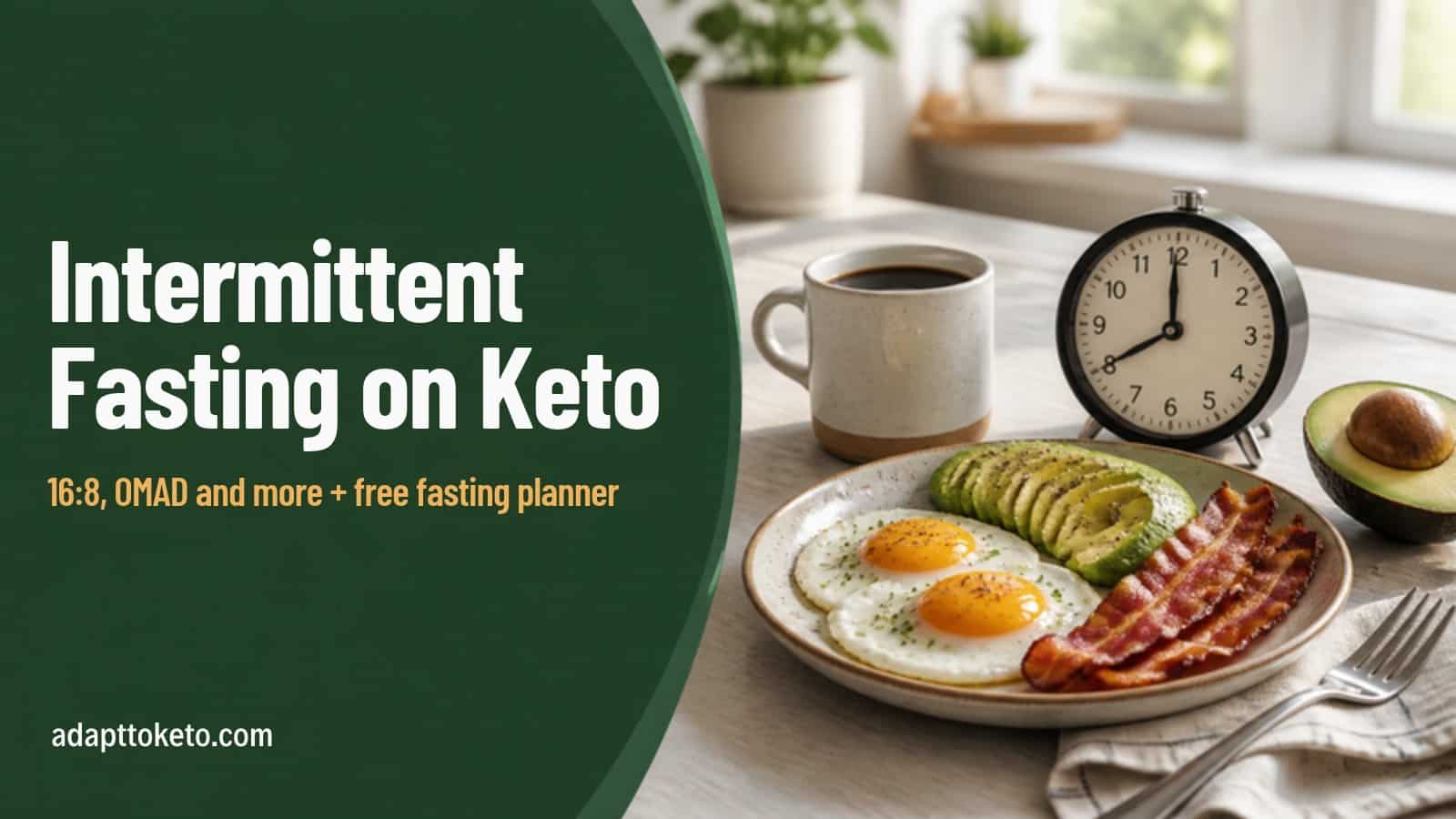
Keto and intermittent fasting often travel together. Once your meals are built around protein, fat and vegetables, skipping breakfast or eating in a shorter window can feel surprisingly easy. But which intermittent fasting keto schedule actually fits your life: 16:8, 18:6, one meal a day, or a 5:2 week?
This guide compares the most common schedules, explains what the research does and does not show, and helps you pick a starting point. Further down you will find a free fasting window planner that maps your eating window on a 24-hour clock and lays out your week.
Quick answer: which schedule to start with
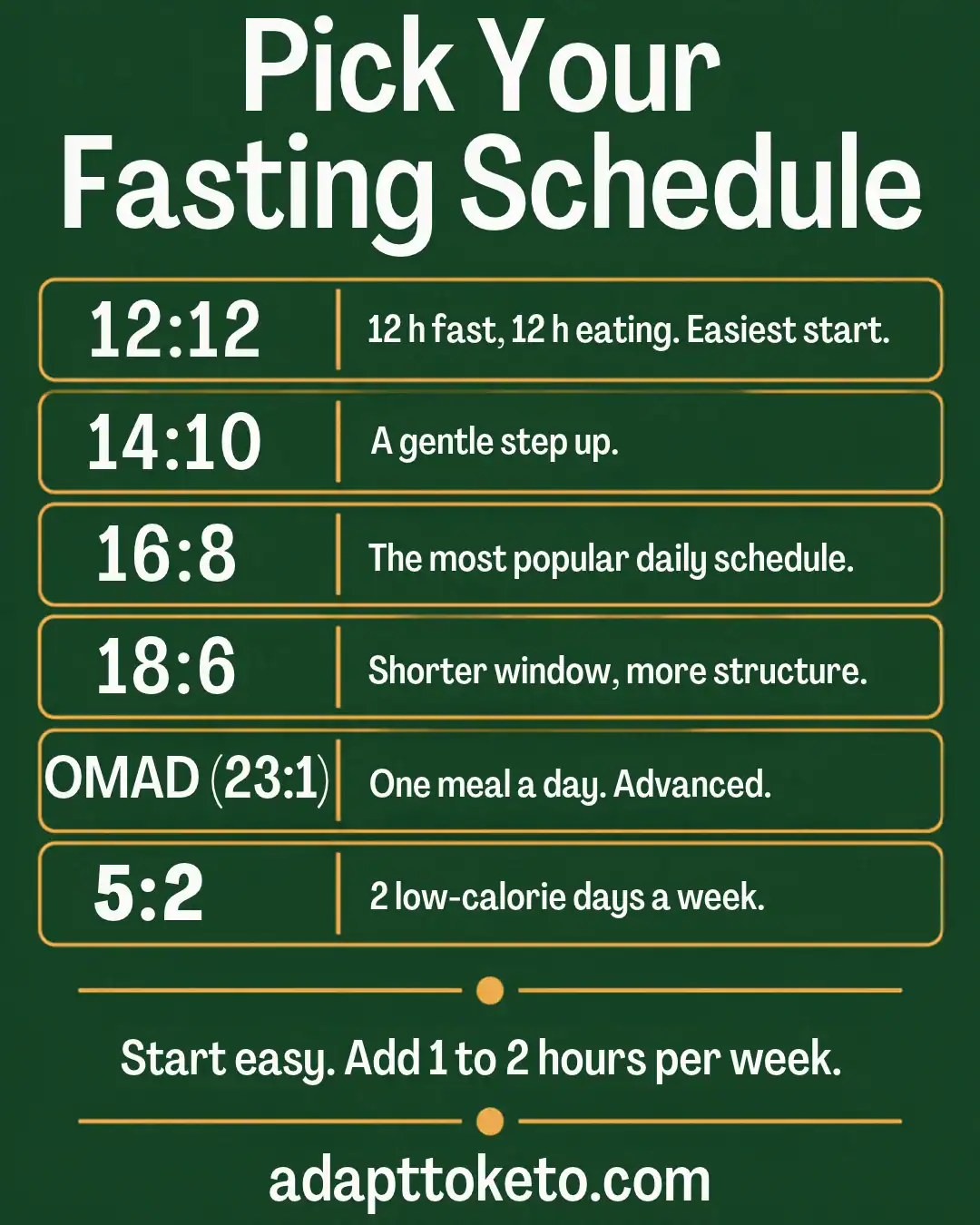
- New to fasting: start with 12:12, an overnight fast of 12 hours. Most people already come close to this.
- Comfortable on keto for a few weeks: move to 14:10, then 16:8. This is the most popular daily schedule.
- Want more structure: 18:6 works for people who like two meals close together.
- Experienced and healthy: one meal a day (OMAD) can be an occasional tool, but it is hard to eat enough protein this way.
- Prefer flexible days: 5:2 means normal keto eating five days a week and two low-calorie days.
Why keto and intermittent fasting pair well
Intermittent fasting is not a diet in the sense of what you eat. It is a pattern of when you eat. Keto, on the other hand, is about what you eat: very few carbs, moderate protein and most energy from fat. That is why the two combine without conflict.
There is also a physiological overlap. In a review in the New England Journal of Medicine, researchers Rafael de Cabo and Mark Mattson describe how fasting triggers a “metabolic switch” from glucose to fat and ketones, with ketone levels in humans rising within roughly 8 to 12 hours after the start of a fast (de Cabo and Mattson, NEJM, 2019). On keto your body is already used to running on fat, so a fasting window builds on a state you are partly in already. We cover this connection in more depth in our article on keto and fasting.
Many people also find that meals rich in protein and fat keep them full longer, which makes a gap between meals easier to hold. That is a common experience rather than a guarantee, and hunger varies a lot from person to person.
What the research actually shows
Intermittent fasting is often sold as a shortcut, so it is worth being honest about the evidence. In most well-controlled trials, fasting schedules work about as well as a regular calorie-controlled diet, not dramatically better.
- 16:8 without other changes: in a 12-week trial with 116 adults, people who ate between noon and 8 pm lost on average 0.94 kg, while the group eating three regular meals lost 0.68 kg. The difference between groups was not significant (Lowe et al., JAMA Internal Medicine, 2020).
- 8-hour window plus calorie limits: in a 12-month trial with 139 people with obesity, both groups followed the same calorie targets. The time-restricted group lost 8.0 kg and the calorie-restriction group 6.3 kg, a difference that was not statistically significant (Liu et al., NEJM, 2022).
- Alternate-day fasting: after one year, weight loss was similar to daily calorie restriction, but more people dropped out: 38% in the fasting group versus 29% with daily calorie restriction (Trepanowski et al., JAMA Internal Medicine, 2017).
- One meal a day: in a small crossover study where people ate the same calories in one meal instead of three, fat mass went down slightly, but hunger and blood pressure went up (Stote et al., American Journal of Clinical Nutrition, 2007).
The takeaway: fasting is a tool that helps some people eat less with less effort. The best schedule is the one you can keep up while still eating enough protein and vegetables.
The schedules compared
| Schedule | Fast / eat | Difficulty | Good for | Watch out for |
|---|---|---|---|---|
| 12:12 | 12 h / 12 h | Easy | Beginners, first week of keto | Late-night snacking |
| 14:10 | 14 h / 10 h | Easy to moderate | A gentle step up | Pushing breakfast too late at first |
| 16:8 | 16 h / 8 h | Moderate | Most people after a few weeks | Too little protein in two meals |
| 18:6 | 18 h / 6 h | Moderate to hard | People who like two meals | Rushed eating, low fiber |
| OMAD (23:1) | 23 h / 1 h | Hard | Occasional use only | Hunger, low protein, higher blood pressure in one study |
| 5:2 | 2 low-calorie days a week | Moderate | Flexible weekdays | Overeating on normal days |
| Alternate-day | Every other day low-calorie | Hard | Very structured people | High dropout in trials |
12:12 and 14:10: the easy entry
A 12-hour fast is simply the gap between dinner and breakfast. Finish eating at 7 pm, eat again at 7 am. It is a good way to stop evening snacking and gives you a baseline before you go further. 14:10 pushes breakfast back by an hour or two.
16:8: the popular middle ground
With 16:8 most people skip breakfast and eat lunch and dinner within eight hours, for example noon to 8 pm. On keto this often means two solid meals with a good portion of protein. If you train in the morning, consider moving the window earlier so you can eat after your workout.
18:6 and 20:4: shorter windows
These leave room for two meals close together or one meal and a snack. They can work well for people who like routine, but planning matters: it is easy to undereat protein and fiber in a short window.
OMAD: one meal a day
Eating all your food in one meal is the most extreme daily option. Getting enough protein, vegetables and electrolytes into one sitting is difficult, and the small study above found higher hunger and blood pressure. If you want to try it, treat it as something for the occasional busy day, not your default.
5:2 and alternate-day fasting
Instead of a daily window, these plans use low-calorie days. On 5:2 you eat normally five days a week and around 500 to 600 kcal on two non-consecutive days. Alternate-day fasting repeats that every other day. On keto, fill those low days with eggs, fish, leafy greens and broth.
Plan your eating window with our free planner
Choose a schedule and the time your last meal of the day ends. The planner shows your eating window on a 24-hour clock, tells you when you pass the 12-hour mark, and maps your whole week, including the low-calorie days on 5:2 or alternate-day fasting. If you tick any of the health checks, it shows a see-your-doctor message instead of a plan.
Keto Fasting Window Planner
Loading the plannerPick a schedule and the time of your last meal. The planner shows your eating window on a 24-hour clock and maps out your week.
Eating window
0
Fasting period
0
Fasting hours per week
0
Water, black coffee and plain tea are fine while fasting
Your week
Tips for this schedule
This planner shows timing only. It does not set calorie or macro targets and is not medical advice. Ketone levels typically start to rise 8 to 12 hours into a fast.
How to start: a gentle four-week ramp
The NEJM review notes that hunger, irritability and trouble concentrating are common at the start, and that these effects usually fade within about a month (de Cabo and Mattson). A gradual build-up makes that period easier:
- Week 1: 12:12. No snacks after dinner.
- Week 2: 14:10. Move breakfast back and dinner forward by about an hour.
- Week 3: 16:8 on most days.
- Week 4: stay at 16:8, or try 18:6 on a few days if you feel good.
If you are new to keto as well, get through the first week of low carb eating before you add fasting. Our guide to keto flu remedies explains why those first days can feel rough and how electrolytes help.
What breaks a fast on keto?
Strictly speaking, anything with calories ends a fast. In practice most fasting plans allow drinks with no or almost no calories:
- Fine: water, sparkling water, black coffee, plain tea and unsweetened electrolyte drinks.
- Gray zone: a splash of cream in coffee. A small amount is unlikely to matter much for ketosis, but it does add calories.
- Breaks the fast: butter or MCT oil coffee, bone broth with fat, and ketone drinks with calories.
Salt matters during a fast as well. You are not getting sodium from food during those hours, and on keto your kidneys already excrete more sodium. Virta Health suggests that most people on a well-formulated ketogenic diet aim for about 3,000 to 5,000 mg of sodium a day (Virta Health). A zero sugar electrolyte drink or a pinch of salt in water can prevent headaches during longer fasts.
Products that can make fasting easier
You do not need to buy anything to fast. These are optional extras that people commonly use.
The Complete Guide to Fasting by Jason Fung
Written by nephrologist Jason Fung with Jimmy Moore, this book explains intermittent, alternate-day and extended fasting in plain language, with practical schedules and answers to common questions. It is a popular starting point if you want more background than a blog article can give. Keep in mind that it also covers longer fasts, which are not something to try without medical guidance.
LMNT Zero Sugar Electrolytes
LMNT is a sugar-free electrolyte mix built around sodium. According to the manufacturer, each stick contains 1,000 mg of sodium, 200 mg of potassium and 60 mg of magnesium. Because it has no sugar it fits within a fasting window, and many people use half a stick in a large glass of water. Read our full LMNT review.
Ketone-IQ
Ketone-IQ is a drink with a ketone source called R-1,3-butanediol. The label of the caffeine-free shot lists 10 g of ketones and 70 calories per 2 fl oz bottle, with a warning not to exceed three bottles a day (product label via Vitacost). Because it contains calories, it technically ends a strict fast. Some people use it to bridge the end of a fasting window or before training. More details in our Ketone-IQ review.
How to choose your fasting schedule
- Start from your current routine. If you never eat breakfast anyway, 16:8 may be easy. If you love breakfast, an earlier window like 8 am to 4 pm can work.
- Match it to your training. Plan a meal with protein within a few hours after hard workouts.
- Think about social meals. A window that ends before family dinner will be hard to keep. Shift it instead.
- Check your protein. If you cannot fit enough protein into your window, the window is too short for you.
- Be flexible. Many people do 16:8 on weekdays and 12:12 on weekends. That is fine.
Common mistakes to avoid
- Going straight to OMAD. Jumping from three meals to one usually leads to strong hunger and overeating.
- Forgetting electrolytes. Headaches and dizziness during a fast are often low sodium and fluids.
- Undereating protein. A short window makes it easy to miss your protein target. Use our keto macro calculator to set one.
- Making up for it with fat bombs. Huge high-fat meals at the end of a fast can cause nausea and add a lot of calories.
- Ignoring sleep and stress. Long fasts on top of poor sleep can leave you wired and tired. Hormones also play a role, as we explain in keto diets for hormonal balance.
When to see a doctor
Do not start fasting without talking to your doctor if you take insulin or other medication for diabetes, blood pressure or a heart condition. Hypoglycemia is the main risk for people with diabetes who fast, and medication doses often need to be adjusted in advance (NIDDK). Case reports also describe ketoacidosis in people combining SGLT2 inhibitors with a very low carb diet (case report). Fasting is also not recommended if you have kidney disease without medical supervision, if you are pregnant or breastfeeding, if you are under 18, or if you have a history of eating disorders. A large survey of young people found intermittent fasting was associated with more disordered eating behaviors (Ganson et al., Eating Behaviors, 2022). Stop and get medical help if you faint, have chest pain, feel confused or have a strong irregular heartbeat.
Final verdict
Keto and intermittent fasting can work well together, mainly because both make it easier to eat less without constant hunger. The research is clear that fasting is not magic: in most trials it performs about as well as regular calorie control. Start with 12:12, work up to 16:8 if it feels good, keep your protein and electrolytes in check, and save OMAD for the occasional day. Use the planner above to set a window that fits your life.
Related articles
- Keto Diet and Fasting: The Powerful Synergy of Ketogenic Eating and Intermittent Fasting
- Ketone-IQ Review
- Keto Diets for Hormonal Balance
- Keto Flu: Symptoms, Timeline and How to Fix It Fast
- Ketosis vs Fat Adaptation
- Best Blood Ketone Meters for Home Testing
FAQ
Question: Is 16:8 better than OMAD on keto?
Answer: For most people, yes. 16:8 leaves room for two full meals, which makes it easier to eat enough protein and vegetables. OMAD is harder to sustain and in one small study raised hunger and blood pressure.
Question: Can I drink coffee while fasting on keto?
Answer: Black coffee and plain tea are allowed on most fasting plans. Adding butter, MCT oil or a lot of cream adds calories and technically ends the fast.
Question: Will intermittent fasting get me into ketosis faster?
Answer: It can help. Ketone levels typically start to rise 8 to 12 hours into a fast, so an overnight fast combined with low carb meals supports ketosis. A blood ketone meter is the most reliable way to check.
Question: How many meals should I eat in a 16:8 window?
Answer: Most people eat two meals, sometimes with a small snack. Plan them so each meal includes a good portion of protein.
Question: Can I exercise while fasting?
Answer: Light activity such as walking is usually fine during a fast. For hard training, many people schedule the session close to their eating window so they can eat a protein-rich meal afterwards. If you feel dizzy or weak, stop and eat.
Question: Do I need to fast every day?
Answer: No. Many people fast on weekdays and eat more freely on weekends. Consistency over weeks matters more than perfection every day.
This article is for general information and does not replace advice from your doctor or dietitian.